Quantum Computing's 'Silicon Moment' has just happened!
Company Quantum Motion have just released news of their brand new silicon-based, Full-Stack Quantum Computer! This is big news!

If you are unsure on any technical terms, check out the Ultimate Quantum Glossary.
Introducing the Full-Stack Architecture
An entire Quantum Computer is made of many intricate parts, which when combined can be referred to as the ‘Full-Stack’. Conceptually, we can think of the quantum computer as being made of many essential layers. Each stack has a part to play in the overall operation of the quantum computer. Let us outline an example of a full-stack:
Physical Hardware - at the lowest core layer lies the physical qubits and the system that implements them. These could be superconducting qubits or neutral atom qubits etc. These qubits are the fundamental building block of the quantum computer and will be responsible for performing quantum operations.
Quantum-Classical Interface - This is the system that connects the quantum computer to the classical world. This bridge is crucial for measuring and thus converting the quantum state into a classical result. Equally, the interface delivers signals (such as microwave pulses) to directly change the state of the qubits. We call these two processes ‘readout’ and ‘control’ pulses.
Quantum Error Correction - Just ‘above’ the physical qubits is where quantum error correction occurs. This is a set of techniques that tries to correct for qubit errors caused by decoherence and noise. We can either choose a specific type of hardware that mitigates error itself, or we can run a quantum algorithm to identify and fix qubit errors.
Logical Qubits - If quantum error correction is successful, we have now formed logical qubits. Logical qubits are essentially a group of many physical qubits. By grouping them together, they become more resilient against errors and therefore more reliable when doing quantum operations.
Quantum Instruction Set Architecture (QISA) - this defines the set of allowed operations and instructions on the quantum computer. This is necessary as certain qubit systems can only perform certain restricted operations.
Quantum Compiler and Runtime - The Compiler has to convert ‘higher-level’ instructions into operations that will actually work on the quantum computer itself. Essentially it is a translator, switching from software code into the native language of the quantum computer. The Runtime system manages the execution of this compiled code, handling tasks such as memory allocation.
Quantum Algorithm - we finally finish off with the actual quantum algorithm. This is the highest level of the quantum computing stack. It tells the quantum computer what instructions to perform and in what order. Using efficient quantum algorithms, we can arrive at useful solutions in quicker times than classical computers.

Quantum Motion’s Breakthrough
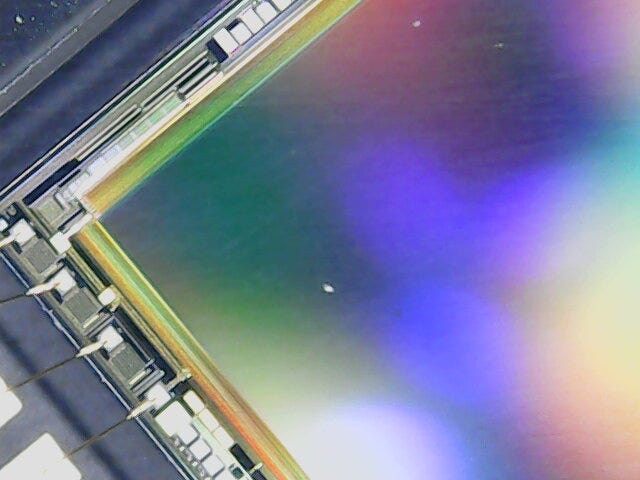
Although we can only go off the press release, Quantum Motion have manufactured the first full-stack quantum computer made of Silicon Complementary Metal-Oxide-Semiconductor (CMOS) chips. Essentially these are the same chips used in normal classical computers. They have deployed this quantum computer at the National Quantum Computing Center - one of the UK’s leading quantum computing companies.
This Silicon-Qubit quantum computer is amazing for several reasons. Firstly, it exists as the entire stack, meaning it a completely operational and self-contained machine. It doesn’t require any external help. Secondly, it is compatible with industry quantum software. This means that existing programs can be run on it. Thirdly, it is ‘rather’ energy-efficient and only requires the equivalent of three 19-inch server racks worth of power. Considering that it contains a dilution refrigerator - which must maintain extremely low temperatures - this is impressive. Finally, the silicon-qubit quantum computer supports upgrades without any change to the overall system footprint.
“This is quantum computing’s silicon moment” - James Palles-Dimmock, CEO of Quantum Motion
Since the architecture of this quantum computer is designed using industry-standard silicon chips, this makes the manufacturing of the computer relatively simple and quick. It also means that the quantum computer can be scaled with ease and mass-produced as it leverages an approach that has already been heavily used (e.g: in phones and laptops). In particular, Quantum Motion’s tile-like architecture is designed to host millions of qubits, which would in turn allow for ground-breaking algorithms to be realised.
Quantum Motion’s machine is being kept at the NQCC as part of the Quantum Computing Testbed Programme, in which seven quantum companies have received a total of £30 million funding. Quantum Motion was founded in 2017 by Professor John Morton of UCL and Professor Simon Benjamin of Oxford University - they have raised around £62 million in equity and grant funding in total.
How does this Silicon Quantum Computer work?
This is the simple answer: The type of qubits that these silicon computers work with are known as spin qubits. This basically means that the information of the qubit is stored within the spin of a physical particle (such as an electron). Amazingly, because these qubits are so small in size, we can theoretically put millions of them onto a single silicon chip. However, one of the main difficulties faced when doing this is the fact that we therefore require a huge and dense amount of ‘control lines’. These are the lines which allow us to manipulate and measure qubits. Even at extremely low temperatures, ensuring that these lines do not interfere with each other or the external environment remains challenging. Therefore, companies like Quantum Motion are likely to be using cryo-CMOS circuits, which essentially have the ‘ultra-cooling mechanism’ built into the the wires.

Future Prospects
I think this is a really exciting and fruitful avenue towards quantum advantage. Quantum Motion have a strong financial backing and are utilising a method which seems to have great potential for scaling. This will make quantum computers more commercially viable - which in turn will boost complimentary sectors such as drug development or energy optimisation. Due to the fact that the silicon quantum computer is fundamentally made of highly-developed and scalable chips, it is expected that useful quantum computers will hit the market in this decade. So latest 2030.
Although there remains some experimental challenges to overcome, I’m feeling rather optimistic about this progression. Given the current growth of quantum technology, five years from now could bring unbelievable advancements. Perhaps we will have quantum laptops after-all?!